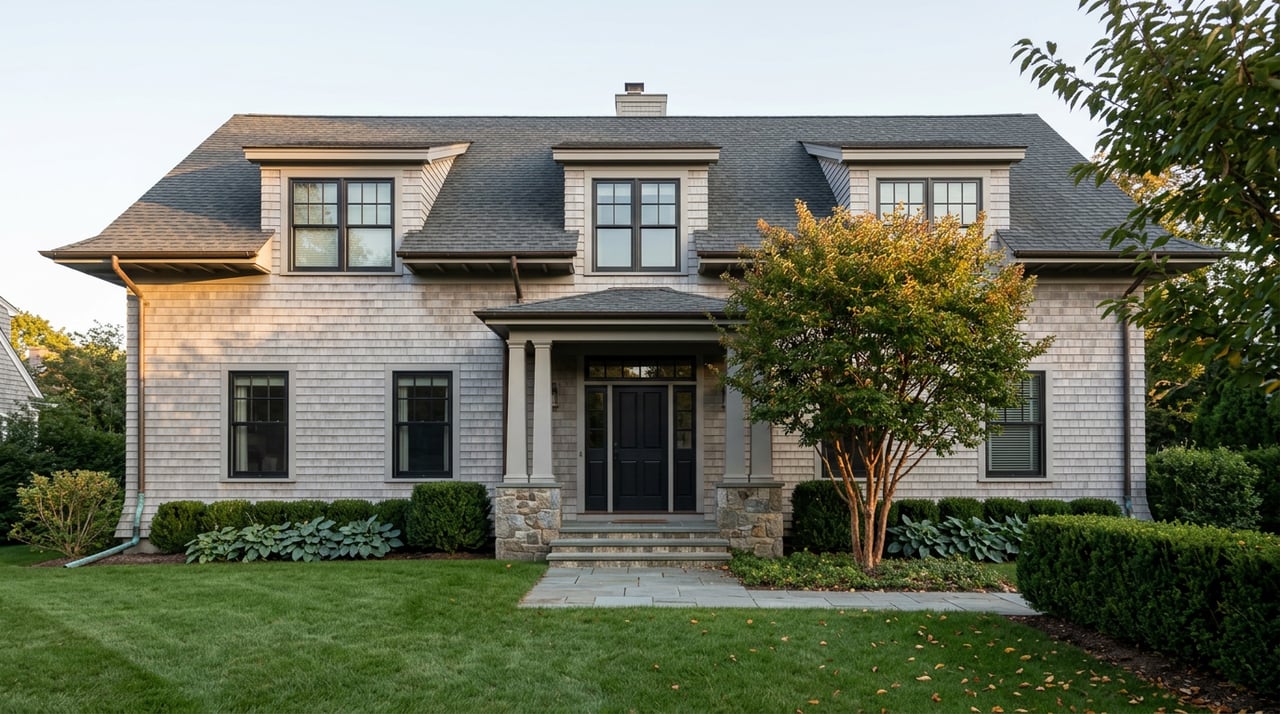
When a builder makes an offer on a modest ranch or Cape in Needham's Single Residence B or General Residence districts, the number on the page rarely has much to do with the house standing on the lot. It has to do with how much house the zoning bylaw currently allows in its place. That buildable envelope is the real asset changing hands. Starting this October, Needham is voting to shrink it in the Single Residence B district, one article at a time, across what now looks like at least two separate Town Meetings.
If you own one of those Single Residence B lots, or you're evaluating one to buy, that timeline matters more than almost anything else in the deal.
The Incentive Nobody Puts on the Listing
Between July 2013 and June 2023, Needham issued 845 building permits for new single-family houses and 99 for two-family houses, 944 in total. Over that same decade, the town issued 840 residential demolition permits. Weighing one number against the other, the town's own Large House Review Study Committee concluded that roughly 89 percent of the new homes built in Needham during that period replaced an older house that came down first. Only a small share came from vacant infill parcels or subdivided lots.
That pattern isn't about Needham homeowners suddenly deciding their houses were unlivable. It's about what a builder can do with the lot once the house is gone. Reporting on the committee's work described the incentive plainly: because a builder can typically sell a new house built to the top of the zoning envelope for more than it costs to acquire the older house and lot beneath it, it pays to build as large as the bylaw allows once that math works, since buyers pay for interior square footage more than for a lot's specific proportions.
That's why a shrinking envelope isn't a cosmetic tweak. It's a change to the arithmetic that has made a torn-down house worth more to a builder than a lived-in one was worth to an owner-occupant. Squeeze the envelope and you squeeze the premium builders can afford to pay for the lot.
What's Actually Headed to October's Warrant
On September 15, 2026, Needham's Planning Board held a public hearing on two zoning articles now set for the town's Special Town Meeting warrant this October: an amendment to half-story and attic requirements in the Single Residence B district, and an amendment to height requirements in the same district. These are the two pieces of the Large House Review package that made it to this cycle intact.
Article 1 would amend the district's half-story and attic requirements. Article 2 would lower the town's maximum roof heights. Needham's draft amendment lists the figures below:
| Standard (Single Residence B) | Today's rule | Article 2 as drafted |
|---|---|---|
| Maximum height, Method 1 | 35 ft | 32.5 ft |
| Maximum height, Method 2 | 32 ft | 30 ft |
Neither article is law yet. Both are proposals headed to a vote.
A third piece, an "average setback" standard meant to keep new houses from sitting closer to the street than their neighbors, was something the Planning Board voted in March 2026 to fold into its broader draft package, but it didn't make the October warrant. A fourth piece, a revised floor-area-ratio formula with a sliding scale and a 15,000-square-foot threshold that would trigger a special permit above it, was discussed at the March 4 hearing, according to Citizen Portal, and described as continued work as of the board's March 17 meeting, with board members signaling in September that further large-house zoning work is more likely aimed at next spring's Annual Town Meeting.
In other words, the buildable envelope on a Needham SRB lot isn't changing on one date. It's changing on an installment plan, article by article, stretching from this October into at least 2027.
In its account of the March 4 hearing on the broader package, Citizen Portal quoted resident Connor Gillon on the stakes for anyone holding a large lot:
"If allowable FAR is reduced, development potential decreases, and with that, market value decreases."
What a Moving Line Means If You're Buying or Selling Right Now
If you're marketing a lot in SRB that's drawing builder interest, understand that today's offers assume today's height and attic rules. A buyer pricing that same lot should account for the proposed changes if the articles pass as drafted.
If you're the one buying with plans to build, confirm the timing and applicable rules with Needham's Building Department before assuming which version of the bylaw applies.
Because the reform is moving in stages, a lot's buildable ceiling could shift again next spring if the floor-area-ratio and setback pieces reach the May Town Meeting. If you're weighing a purchase now, it's worth asking your design team to model the house against both today's bylaw and the pending draft, not just one or the other.
The Other Clock Running on Older Needham Houses
Layered on top of the zoning question is Needham's demolition delay bylaw. Today that bylaw imposes up to a six-month delay before a historically significant house can come down, giving owners and preservation advocates a window to look for an alternative to demolition. The Historical Commission has been actively discussing extending that delay to twelve months, and in at least one recent case, a house on the inventory was designated historically significant this past August, triggering the standard 45-day window that leads into a demolition-delay hearing.
The Needham Observer reported on how that path played out on Great Plain Avenue, where Jeff Heller bought the 1792 Daniel Kingsbury House along with an adjacent vacant lot in 2019, intending to preserve the historic structure while more than doubling it in size to roughly 3,600 square feet, with an anticipated selling price above $2.5 million. Even with that intent, the project ran into friction a straight teardown would have skipped entirely: a local bank declined to finance it, so Heller borrowed from banks in Newton and Wellesley instead, and when contractors opened the walls they found knob-and-tube wiring that hadn't shown up anywhere on paper.
None of that makes preservation the wrong call. It does mean a shrinking building envelope and a potentially longer demolition delay are pulling in the same direction at the same time, toward renovation and away from the reflexive teardown that's defined so much of Needham's SRB and GR neighborhoods over the past decade.
What This Means for the Number on Your Lot
Whatever figure a builder, an agent, or your own instinct attaches to a Needham teardown lot this fall, treat it as a snapshot of a bylaw still in motion rather than a fixed fact. Two articles are headed to an October vote that would trim attic space and lower rooflines in the SRB district. More changes, on setbacks and floor-area ratio, are still working toward a future Town Meeting. And any house old enough to sit on the Historic Inventory carries a separate clock that town officials are actively discussing lengthening.
If you're on either side of a transaction involving a large Needham lot this year, the more useful question isn't what it's worth. It's what it's worth under which version of the bylaw, and by when.
Frequently Asked Questions
Does the new zoning apply to a project I've already started? If you're mid-project, check your permit status directly with Needham's Building Department rather than assuming either way.
Which district do the October articles affect? The two articles described here apply specifically to Single Residence B.
What if the house I'm looking at is on Needham's Historic Inventory? Confirm that status and any applicable delay with the town before planning around a teardown. The current delay can be up to six months, and town officials are discussing extending it to twelve months.
If you're weighing a purchase, a sale, or a redevelopment plan on a large Needham lot while this bylaw works its way through Town Meeting, The Charney Group's in-house development and CRE background means we're used to pricing a property against more than one version of the zoning map. Schedule a private market consultation and we'll walk through what a specific lot is worth under today's rules and under what's proposed.
This article is general information, not legal, tax or financial advice. Consult a qualified professional about your situation.