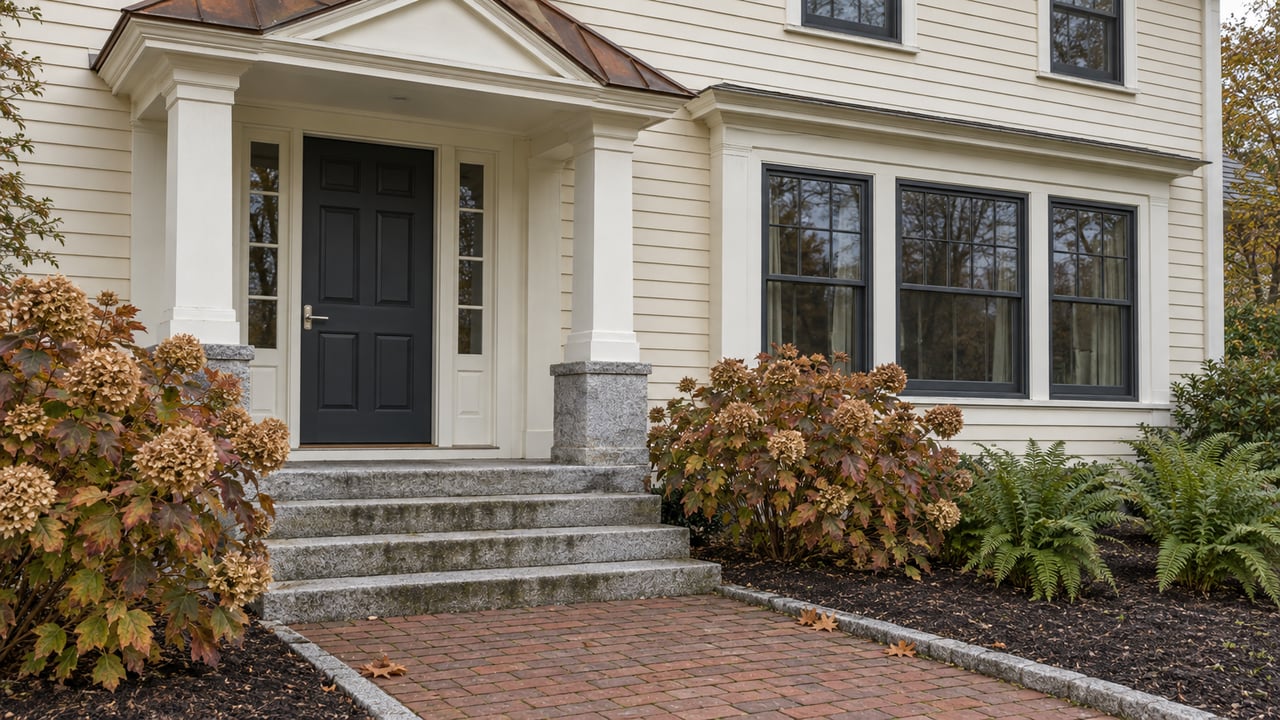
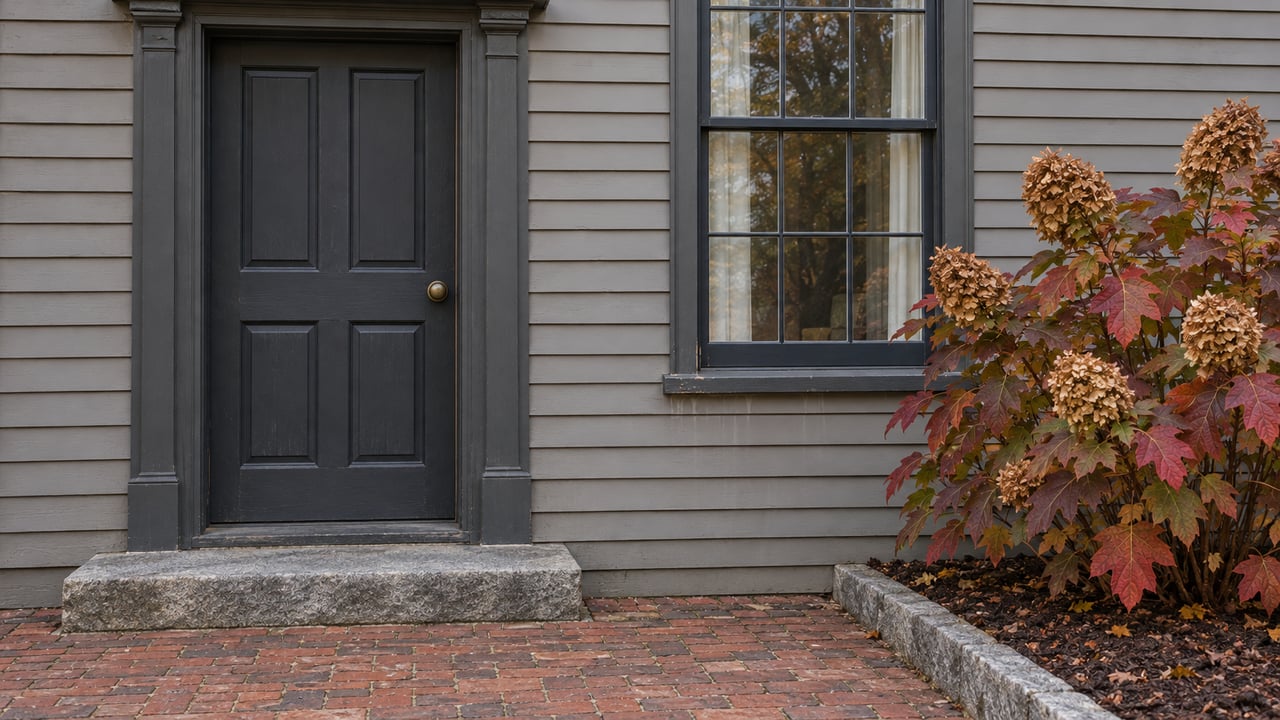
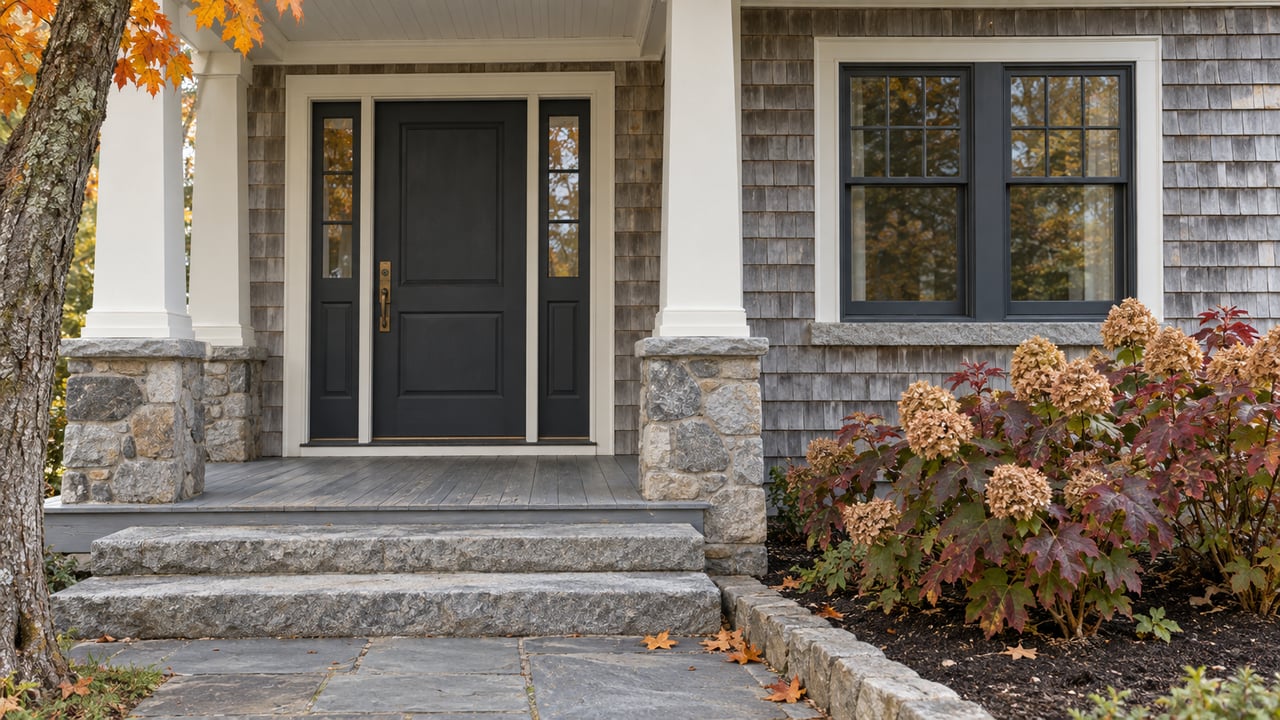
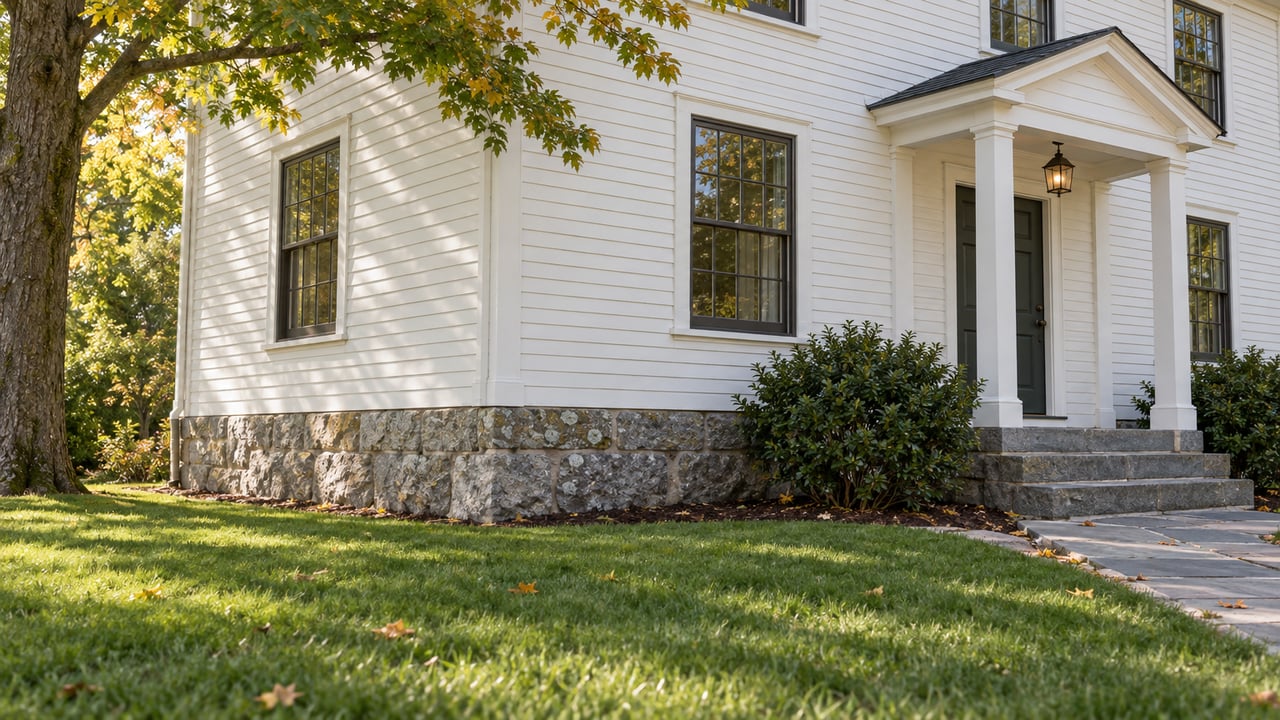
Drive down Wellesley Street between Weston Center and the Wellesley line and you pass them without quite registering what you're seeing: a weathered Federal-period farmhouse, a brick barn with four truncated gables, and a small building topped by a bell cupola, all three standing in a row on land that still reads as open field and old-growth woods. Most people who walk the trails behind them, or let a dog off leash near the meadow, know this land as Case Estates. Fewer know that these three specific buildings, the Rand House, the Hillcrest Barn, and what locals call the Red Schoolhouse, have been sitting vacant for about twenty years, or that the town has explored their sale over the past several years.
In a later effort to sell the buildings, the town supplied designs for them and, as The Boston Globe reported, subdivided the shared parcel.
A working farm, not a museum piece
As Boston.com reported, Marian Roby Case began assembling the land in 1909, after her father's death, to run an experimental farm called Hillcrest Farms. About 40 acres went under cultivation, worked mostly by what the town's records call the Hillcrest Boys, up to twenty local teenagers who earned between $4 and $20 a month. After 1913, Case added a classroom component: the boys spent an hour a day studying agriculture and wrote observation papers, and their essays, alongside her own commentary, were published every year from 1911 to 1941. In 1920 the operation was renamed Hillcrest Gardens as the focus shifted toward horticulture and display plantings. The 1938 hurricane wrecked much of that work, destroying the orchards and more than 3,000 trees, and Case, in declining health, spent her final years looking for an institution to carry the project forward. When she died in 1944, she left the property to Harvard University's Arnold Arboretum.
One detail from that era is easy to miss and worth knowing if you ever walk the property: a freestanding dry stone wall roughly 10 feet high, up to 6 feet thick, and 200 feet long, built in 1911 as a birthday gift from Marian to her sister Louisa. It's been described as the longest freestanding dry wall in New England, and it's still there.
Why Harvard's ownership didn't mean upkeep
The Arboretum used the site as a plant nursery and testing ground for decades, but by 1989 and 1990 it had decided the property no longer fit its mission and began winding down operations. In 1986, before that shift, Harvard had already sold a 35-acre field across from the main house to the Town of Weston, which still leases it to the nonprofit Land's Sake for working crops and summer youth employment. That arrangement continues today, which is part of why the surrounding fields still feel farmed even while the historic buildings sat empty.
Getting the rest of the land, and the buildings on it, out of Harvard's hands took far longer than anyone in 2006 expected. In November of that year, a Special Town Meeting voted to buy the remaining property for $22.5 million. The closing then stalled for close to a decade over contamination found on the site, dating back to roughly 1900, when part of the land was used as an apple orchard and treated with the pesticides common to that era. Harvard and the town didn't reach an agreement clearing the way for sale until March 2015, and the purchase didn't fully close until 2016, with the town's title to the three buildings specifically finalized in 2017. By then, the Rand House, the Barn, and the Schoolhouse had already gone without regular occupancy or upkeep for years.
The first proposal process
By 2021, the town had authorized selling the Barn and the Schoolhouse, and in September 2024 it issued a formal request for proposals, with bids due that November. The Rand House wasn't even part of that round.
According to minutes from a February 2026 Zoning Board of Appeals meeting, that effort produced no viable bids. The Schoolhouse and Barn sat on a single shared lot; Boston.com reported that historic preservation restrictions protect the Rand House's main staircase and the Schoolhouse's cupola. Prospective buyers had to consider those restrictions and the shared lot when preparing a proposal.
What the town did differently the second time
In August 2025, the town brought in Patrick Ahearn, a prominent local architect, to draw an actual design for all three structures as single-family homes, not a proposal a buyer would need to originate from scratch. Ahearn's plan showed the Barn converted into a home of more than 9,000 square feet with six bedrooms, the Rand House renovated to four bedrooms, and the Schoolhouse reworked into a three-bedroom residence. The town then went further and physically subdivided that shared parcel, removing the need for a future buyer to negotiate co-ownership with whoever bought the neighboring building.
With that groundwork in place, Weston issued a new request for proposals in March 2026, this time covering all three buildings, available individually or together, with bids due April 13, 2026. Town Manager Leon Gaumond Jr. told reporters the intent was straightforward: the buildings sit inside the Case's Corner Historic District, listed on the National Register of Historic Places since 2002, and the town wanted the historic character preserved even as ownership changed hands. As Boston.com reported, Diana Chaplin of the Weston real estate firm handling the listing side of the sale said the hope was that someone would finally make them beautiful.
The restrictions attached to any eventual sale are specific enough to shape what a buyer could actually do with the land:
- Interior features named in the preservation restrictions, including the Rand House staircase and the Schoolhouse cupola, cannot be removed
- The adjacent 19-acre meadow can be mowed only by the town, and no more than three times a year, to protect native plants and pollinators
Why this matters even if you never plan to bid on it
Most Weston residents encounter this land as a place to walk, not a listing to evaluate. The Legacy Trail, a stone dust path through the property, runs to a landmark locals call the Compass Rose, and near that endpoint a wildflower and pollinator restoration project, led by science teacher Dr. Susan Erickson, has been taking shape as part of ongoing conservation work on the grounds. None of that changes regardless of who eventually buys the Rand House, the Barn, or the Schoolhouse. What does change is who becomes responsible for three of the oldest buildings on a piece of land that has been continuously shaped by one family's horticultural ambitions, one university's research mission, and one town's patience, since 1863.
As of this writing, Weston has not publicly announced whether any of the proposals submitted by the April deadline were accepted, or by whom. Residents curious about the outcome can watch the town's Select Board agendas for updates on the Case Estates properties, since that board makes the final call on which bids, if any, best serve the town.
For those who find themselves thinking about Weston's older housing stock, its preservation rules, or what a project like this signals about the town's approach to its historic inventory, The Charney Group works with buyers, sellers, and owners navigating exactly this kind of property, and welcomes a conversation whenever you're ready to schedule a private market consultation.
This article is general information, not legal, tax or financial advice. Consult a qualified professional about your situation.