Thinking about trading Boston’s energy for more space in Weston? It is a common move for buyers who want a different daily rhythm, but the shift is bigger than just swapping a city address for a suburban one. If you are weighing the pros, costs, and lifestyle changes, this guide will help you compare what really changes when you move from Boston to Weston. Let’s dive in.
Why Weston Feels So Different
Weston and Boston offer very different living environments. The Census estimates Weston’s 2024 population at 11,827, while Boston’s is 673,458. Population density tells the story even more clearly: Weston has about 704.6 people per square mile, compared with 13,976.7 in Boston.
In practical terms, that usually means a quieter, lower-density setting with more separation between homes. Weston is also much more owner-occupied, with 87.5% of housing units owner-occupied versus 35.7% in Boston. If you are moving west, you are likely choosing a town built around long-term homeownership rather than the more mixed tenure profile of the city.
Housing in Weston vs Boston
Weston housing skews single-family
If you are used to Boston’s mix of condos, apartments, and attached homes, Weston will likely feel very different. According to Weston’s draft 2025 Unified Plan, nearly 88% of the town’s housing stock is detached single-family homes, while multifamily units make up fewer than 10%.
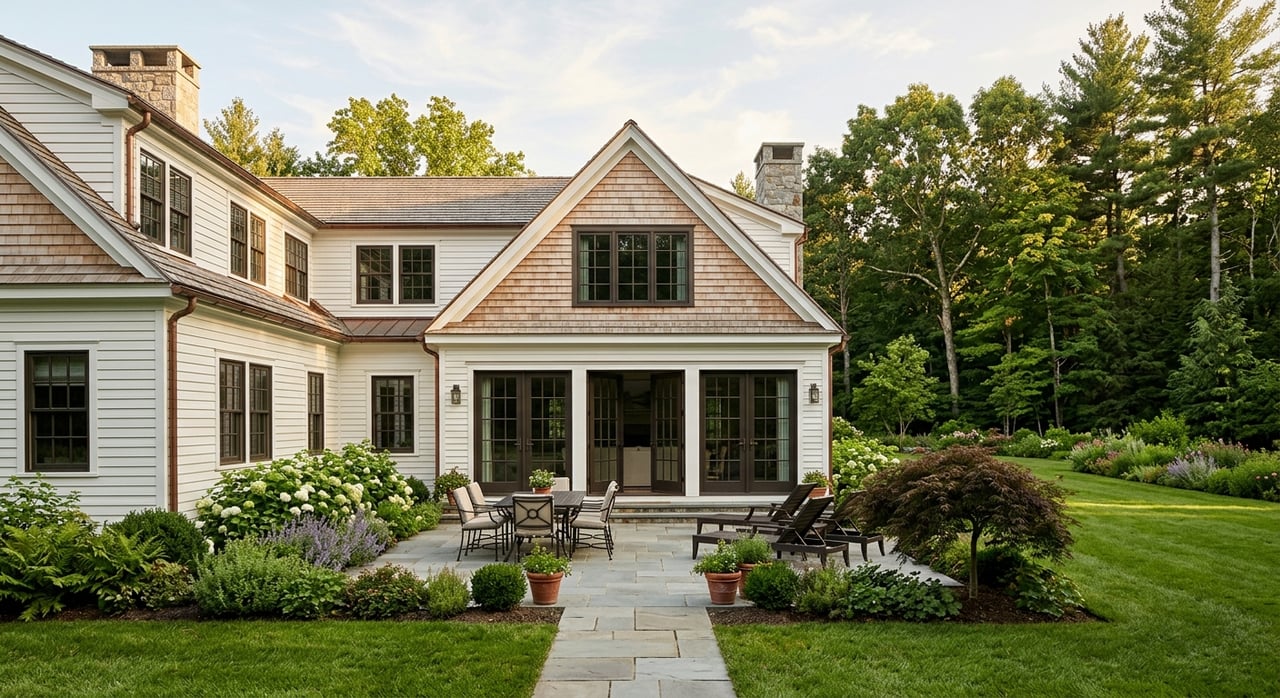
That housing mix shapes the feel of the town. Buyers should generally expect more detached homes, more privacy, and more land than they would typically find in Boston neighborhoods. The town’s zoning standards reinforce that pattern, with minimum lot areas ranging from 20,000 to 60,000 square feet, plus substantial frontage and setback requirements.
You may gain land and privacy
For many Boston buyers, the biggest draw is space. Weston’s development pattern has long been built around larger lots and winding streets, which tends to create more visual privacy between homes.
That extra space can be a real advantage if you want room to spread out, entertain, or stay in place for many years. It also comes with more upkeep, which is worth factoring into your budget and day-to-day routine.
The Cost Difference Is Significant
A move from Boston to Weston often means a major budget reset. The median value of owner-occupied homes is $1,694,400 in Weston versus $731,700 in Boston, based on Census data. Median selected monthly owner costs with a mortgage are reported as $4,000+ in Weston and $2,986 in Boston.
That gap matters before you even account for taxes, maintenance, and vehicle costs. If you are moving to Weston, it helps to think beyond purchase price and look at the full monthly and annual carrying cost.
Property taxes deserve close attention
Weston’s FY2026 tax rate is listed at $10.88 per $1,000 of assessed value, down from $11.10 in FY2025. Even so, the town’s FY2025 Unified Plan reports that Weston had the highest average single-family tax bill in Massachusetts that year at $25,464.
For buyers moving from Boston, this is often one of the biggest financial adjustments. A larger home on a larger lot can build long-term value, but it also tends to bring higher recurring costs tied to ownership.
Budget shifts often go beyond the mortgage
When buyers move from Boston to Weston, they often reallocate spending in a few predictable ways:
- more toward home equity
- more toward property taxes
- more toward maintenance and landscaping
- more toward vehicle ownership and driving-related costs
- less toward walk-based and transit-based convenience
That does not make Weston more or less desirable. It simply means your money may support a different kind of lifestyle.
Commute Changes Matter More Than Many Buyers Expect
Weston is more car-dependent
One of the clearest day-to-day shifts is transportation. Weston’s Transportation & Access page states that there is no bus service in town. Major roads serving Weston include Routes 30, 117, and 128/I-95, U.S. Route 20, and the Massachusetts Turnpike.
If you are moving from a Boston neighborhood where walking, rideshares, and transit are part of your normal routine, Weston will likely require a more car-centered lifestyle. For many households, that means thinking carefully about how many cars you will realistically need.
Commuter rail can help, but it is limited
Weston does offer commuter rail access to North Station. The town reports travel times of about 30 to 31 minutes from Hastings and 28 to 29 minutes from Kendal Green.
That can work well for some Boston-bound commuters, especially if North Station is close to where you need to be. But if your destination is elsewhere in the city or your schedule changes often, it is smart to map out the full trip, not just the train ride.
Lifestyle Trade-Offs: Space vs Convenience
This move is often less about square footage alone and more about what kind of daily life you want. Boston offers density, proximity, and flexibility. Weston offers more land, a lower-density setting, and a housing profile centered on detached homes.
Weston households are also larger on average, with 2.85 persons per household versus 2.19 in Boston. That points to a different residential pattern overall, one that may align better if you are planning for longer-term living needs and want more room at home.
Open space is a real part of Weston living
Weston has a strong outdoor recreation profile. The town says its Conservation Commission owns and maintains about 1,800 acres of protected land, with about 90 miles of trails, fire roads, and outlooks open for passive recreation.
If access to open space matters to you, this is one of Weston’s defining advantages. For buyers who want more room both on their property and beyond it, that can be a meaningful part of the decision.
Schools and Long-Term Planning
For some buyers, schools are part of the reason to consider a move. Weston Public Schools states that the town has five schools serving pre-K through grade 12. The district also reports an average elementary class size of 19.9 students in grades K-5.
If schools are part of your planning, it helps to view them alongside housing costs, commute needs, and how long you expect to stay. A move like this often makes the most sense when it fits a broader long-term household plan.
Who Weston Often Fits Best
Based on Weston’s housing mix, transportation setup, and cost structure, the town often appeals to buyers who are looking for a specific set of trade-offs. In many cases, Weston is a strong fit if you:
- want more land and privacy
- prefer detached-home living
- are comfortable with a car-centric routine
- value open space as part of daily life
- can absorb higher property taxes and upkeep
- expect to hold the property long enough for the costs to make sense
That last point matters. The larger transaction and carrying costs involved in a Weston purchase often reward a longer time horizon.
Questions to Ask Before You Move
Before you make the leap from Boston to Weston, it helps to pressure-test the decision with a few practical questions:
- Will your commute still work if you need to go beyond North Station?
- How many cars will your household realistically need?
- Are you buying for space and stability, or for proximity and flexibility?
- Does Weston’s open-space profile matter enough to justify the cost and reduced urban convenience?
- Are you planning for a seven- to ten-year horizon, or something shorter?
These questions can quickly clarify whether Weston fits your priorities now, not just in theory.
The Bottom Line on Moving to Weston
A move from Boston to Weston is usually a move toward space, privacy, detached-home living, and a more car-dependent routine. It can also mean substantially higher housing costs, property taxes, and maintenance responsibilities. For the right buyer, those trade-offs are worth it because the lifestyle is the point.
If you are considering a move and want a measured, local perspective on whether Weston fits your goals, The Charney Group can help you evaluate the market with clarity and confidence.
FAQs
What is the biggest lifestyle change when moving from Boston to Weston?
- The biggest shift is usually moving from a walk-and-transit lifestyle to a more car-dependent routine, along with gaining more space and privacy.
How does Weston housing compare with Boston housing?
- Weston’s housing stock is dominated by detached single-family homes, while Boston offers a much broader mix of condos, apartments, and attached housing.
Are property taxes in Weston higher than many buyers expect?
- Yes. Weston’s FY2025 Unified Plan reports the highest average single-family tax bill in Massachusetts that year at $25,464.
Does Weston have public transit to Boston?
- Weston has commuter rail service to North Station from Hastings and Kendal Green, but the town states that it has no bus service.
Is Weston a good fit for long-term buyers?
- It often is for buyers who want more land, privacy, detached-home living, and enough time in the home to justify the higher purchase and carrying costs.