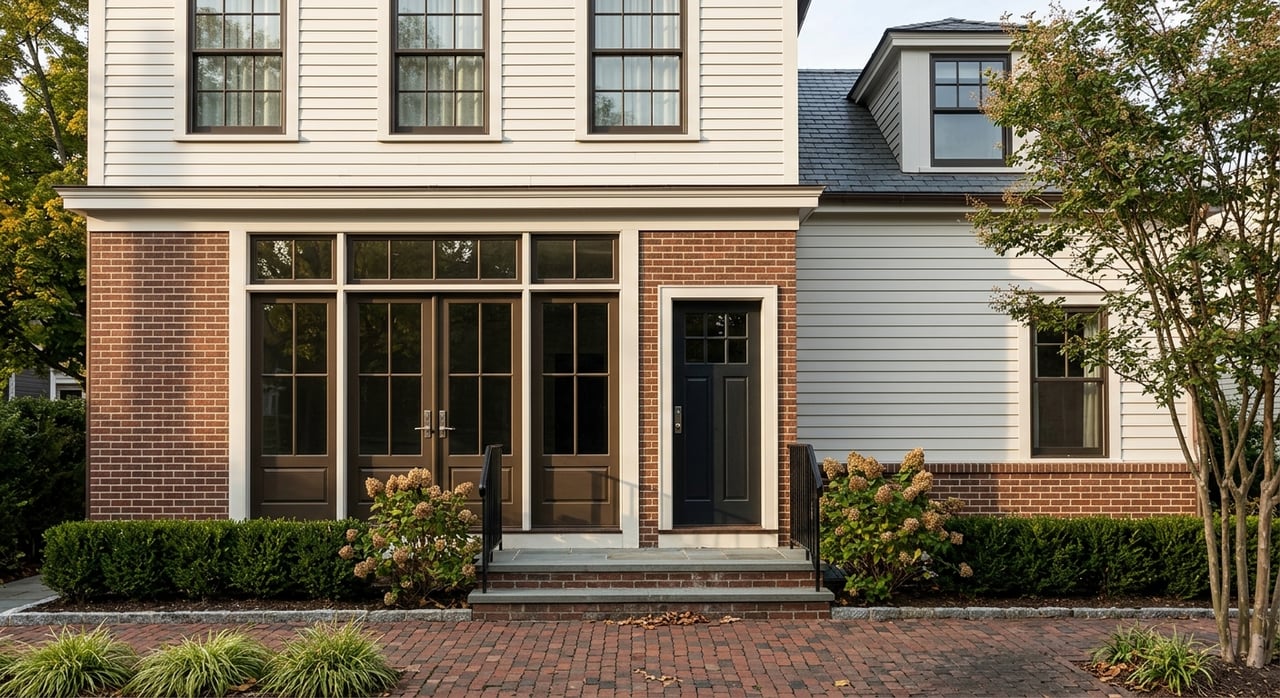
Looking at small investment opportunities in Weston can feel exciting and intimidating at the same time. The town has strong home values, limited housing supply, and clear demand, but it is also a place where zoning, permitting, and parcel details can shape the outcome of a deal more than the headline price. If you are exploring a small project here, this guide will help you understand what tends to work, where the friction points are, and how to evaluate opportunities with more confidence. Let’s dive in.
Why Weston stands apart
Weston is not a typical small-investment market. According to the U.S. Census Bureau, the town has a 90.4% owner-occupied housing rate, a median value of owner-occupied homes of $1,586,100, and median household income above $250,000 for 2019 through 2023. Market trackers reinforce the same pattern, with Zillow reporting an average home value of $2,269,220 as of April 30, 2026, and Redfin reporting a median sale price of $2.3 million in March 2026.
That matters because small deals in Weston often hinge less on cash flow and more on design, approvals, and resale potential. In a town with values at this level, even a modest project can carry high basis costs. For many buyers and owner-investors, the real question is not just what you can buy, but what you can realistically improve or add.
Start with the zoning path
In Weston, zoning is often the first filter. The town’s zoning structure includes single-family, multiple-dwelling, business, office and research, commercial, wetlands and floodplain protection, aquifer protection overlay, and wireless overlay districts. That means the same idea can look very different depending on the exact parcel.
Most residential property sits in the A, B, C, or D single-family districts, where a single-family home is the only by-right use. These districts also have large minimum lot sizes and frontage requirements, ranging from 60,000 to 20,000 square feet and 250 to 150 feet depending on the district. In practical terms, lot geometry can limit your options before you ever get to plans, pricing, or construction.
Why parcel specifics matter
A small investment opportunity in Weston is rarely a simple plug-and-play project. Two homes with similar size and price can have very different redevelopment potential based on frontage, setbacks, nonconforming conditions, wetlands, or septic constraints. That is why a parcel-level review matters so much here.
Weston is also not broadly a mixed-use town. The bylaw allows certain business and commercial uses, but many of them require site plan approval or special permits, especially as scale increases. If you are evaluating a small commercial or mixed-use-style concept, the entitlement story may be more important than the operating story.
The most realistic small projects in Weston
For most buyers and investors, a few opportunity types stand out as more realistic than others.
ADUs offer a clear small-scale option
Accessory dwelling units are now one of the most relevant paths for small-scale density in Weston. The town adopted an ADU bylaw on February 2, 2025, and says qualifying ADUs can be built by right if they meet dimensional, code, septic, wetlands, parking, and short-term-rental requirements. Weston also kept a special-permit route for accessory residences that do not meet the ADU standard.
State ADU guidance says protected-use ADUs may be no larger than 900 square feet or half the size of the principal dwelling, whichever is smaller. For a homeowner or investor, this can create a practical opportunity to add flexible living space without pursuing a much larger zoning change. Still, by-right does not mean automatic, especially if Title V, Board of Health, detached structures, or site conditions come into play.
Single-family value-add is often the simplest path
In Weston, value-add single-family projects remain the most straightforward small investment strategy. Since single-family use is the default by-right pattern in most residential districts, homes with deferred maintenance, awkward layouts, or legal nonconformities may offer a clearer path to value creation than projects that depend on added density.
That does not mean every remodel is easy. Weston’s large setbacks, lot requirements, and rules around nonconforming structures can quickly make a renovation more permit-heavy than expected. The best candidates are often the ones where you can improve function and finish level without needing a fundamental zoning reset.
Small multifamily is possible, but selective
Small multifamily conversions can work in Weston, but they tend to be highly site-specific. The town’s multiple-dwelling districts allow up to four-unit multifamily by site plan approval, while larger multifamily generally requires a special permit. That creates opportunity, but only in the right district and only when the parcel can support the use.
Weston’s official 3A page also says the town remains noncompliant with MBTA multifamily zoning requirements while continuing to work on updated 3A zoning. A separate 2025 overlay amendment points to specific locations where multifamily capacity has been under consideration, including 133 Boston Post Road, 0 Village Road, 751 and 761 Boston Post Road, and 75 and 99 Norumbega Road. The practical takeaway is simple: future multifamily opportunity in Weston is being worked out at the parcel level, not through a broad townwide policy.
Small commercial requires patience
Business and commercial parcels can present modest investment opportunities, but these should be underwritten carefully. In business districts, smaller office, bank, and retail uses may be allowed by site plan approval, while larger uses and categories like eating places and personal service establishments often require a special permit.
That means parking, traffic flow, access, and neighborhood impacts can influence the outcome as much as rents or tenant demand. If you are considering a small commercial acquisition, it is wise to think like a land-use buyer first and an operating investor second.
Why yield is not the whole story
Weston generally looks more resale-driven than yield-driven. Zillow reports an average rent of about $6,000 per month, and when compared with its reported average home value of $2,269,220, the rough gross yield is just over 3% before expenses. That points to a market where appreciation, premium repositioning, and long-term flexibility may matter more than near-term cash flow.
For many small investors, that changes how you should evaluate a deal. A project that looks weak on simple rent math could still make sense if it has a strong resale angle, a cleaner entitlement path, or the ability to create a more competitive end product for Weston’s market. In other words, the highest-value question is often about exit strategy.
Key risks to review early
In Weston, early diligence can save you from expensive surprises. The town’s bylaw notes that some special permits require a unanimous vote from the Zoning Board of Appeals or four affirmative votes from the Planning Board, and special permits lapse if substantial use does not begin within two years. Site plan approval can also come with project conditions, including parking-related adjustments in some districts.
That makes timing and approval risk very real. If you are moving quickly on a property, you want to understand those risks before your deposit becomes hard or your financing clock starts running.
Environmental constraints can change feasibility
Weston includes wetlands and floodplain protection districts as well as an aquifer protection overlay district. The Conservation Commission reviews and permits work in or near wetlands under state and town law. For parcels near water, low ground, recharge areas, or sites with septic sensitivity, this review should happen early.
A property can look promising on paper and still face real limitations once drainage, wetland buffers, or utility conditions come into focus. That is especially true in a town where environmental overlays are part of the larger development picture.
ADU and conversion projects need technical review
Even relatively small projects benefit from technical screening. Weston’s ADU summary makes clear that Title V, Board of Health, wetlands, parking, separate entrance, and short-term-rental limits all apply. Those issues can affect cost, layout, and overall feasibility.
For many buyers, this is where a concept sketch is not enough. You may need a surveyor, architect or code consultant, and septic designer early, especially if the property is not sewered or if you plan to use a detached structure.
A practical way to evaluate a Weston opportunity
If you are comparing small investment options in Weston, a disciplined checklist can help you focus on what matters most.
Ask these questions first
- Is the current use already allowed by right?
- What zoning district is the parcel in?
- Do lot size, frontage, and setbacks support your plan?
- Are there wetlands, floodplain, aquifer, or septic concerns?
- Would the project need site plan approval or a special permit?
- Is the likely profit tied more to resale than rental income?
- Can you improve the property without triggering a major redesign?
- Do you have the right professionals involved early enough?
These questions sound basic, but in Weston they often separate workable ideas from expensive distractions. A deal that is simple in another suburb may be much more complex here.
What tends to work best
In today’s Weston market, the strongest small investment opportunities are usually entitlement-efficient. That might mean an ADU that fits the by-right rules, a carefully scoped single-family renovation, or a very specific multifamily or business parcel with a clear approval path.
Broad speculation on by-right mixed-use potential is generally not the norm here. The town’s housing pressure is real, and its long-term planning points to a desire for more housing options, but that does not erase the importance of neighborhood context, board review, or parcel-specific limitations. In Weston, the first underwriting question is often whether a project can be approved, then whether it will lease or sell well.
For buyers, owners, and small investors, that makes local guidance especially valuable. When you pair market knowledge with development-aware due diligence, you can avoid chasing the wrong opportunity and focus on the projects that actually fit Weston’s rules and market dynamics.
If you are weighing a property in Weston and want a measured, parcel-specific read on its potential, The Charney Group offers the kind of local, hands-on guidance that can help you move with more clarity.
FAQs
What types of small investment properties are most realistic in Weston?
- The most realistic options are usually ADUs, single-family value-add projects, and select multifamily or commercial parcels with a clear zoning and approval path.
How important is zoning when evaluating a Weston investment property?
- Zoning is critical in Weston because most residential parcels allow only single-family use by right, and lot size, frontage, setbacks, and overlays can determine whether a project is feasible.
Are ADUs allowed in Weston, Massachusetts?
- Yes. Weston adopted an ADU bylaw in February 2025, and qualifying ADUs may be built by right if they meet the town’s dimensional, code, septic, wetlands, parking, and related requirements.
Is Weston a strong cash-flow market for small investors?
- Weston appears to be more resale-driven than yield-driven, with rough gross yield based on current Zillow figures coming in at just over 3% before expenses.
What local risks should buyers review before buying a small investment property in Weston?
- Buyers should review zoning, permit requirements, special permit risk, wetlands and floodplain issues, aquifer overlays, septic capacity, parking, and any Title V or Board of Health concerns as early as possible.